
Beacon Machine Manufacturing Co.,ltd
 Language
  EN
EN RU
RU ES
ES DE
DE EL
EL IT
IT JA
JA KO
KO PT
PT ID
ID SR
SR UK
UK VI
VI TH
TH TR
TR MS
MS BE
BE AR
ARBlog
Four Major Diesel Injector Faults and Solutions
Four Major Diesel Injector Faults and Solutions
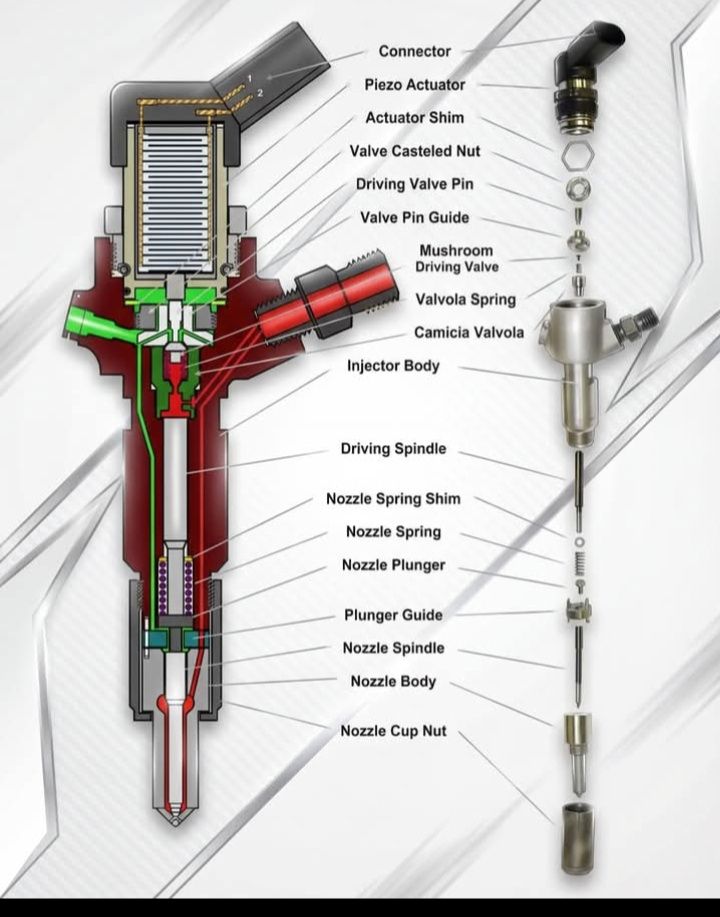
1. Poor Injector Atomization
Symptoms: Reduced diesel engine power, black smoke in the exhaust, and abnormal engine noise.
Analysis: Low injection pressure, wear and carbon buildup in the nozzle orifice, wear on the spring end face, or decreased spring force can all cause the injector to open prematurely and close late, resulting in poor fuel atomization.
Additionally, excessively large diesel droplets cannot burn completely and flow down the cylinder wall into the oil sump, increasing the oil level, decreasing viscosity, and worsening lubrication. This can even lead to bearing failure and cylinder scoring.
2. Needle Valve Seizure
Symptoms: Reduced engine power, engine vibration, and in severe cases, inability to start.
Analysis: Moisture or acidic substances in the diesel fuel can cause the needle valve to corrode and become stuck. Damage to the needle valve's sealing cone surface allows combustible gases from the cylinder to enter the mating surface, forming carbon deposits and causing the needle valve to seize. The injector then loses its injection function, causing the cylinder to stop working.
3. Injector Dripping
Symptoms: When the diesel engine temperature is low, starting is difficult, and white smoke is emitted from the exhaust pipe. As the engine temperature rises, the smoke turns to black. Fuel consumption is also high.
Analysis: When the injector is working, the sealing cone surface of the needle valve body is subjected to frequent and strong impacts from the needle valve. Combined with the continuous injection of high-pressure fuel from this point, the cone surface gradually wears down or develops spots, resulting in injector dripping.
When the diesel engine temperature is low, white smoke is emitted from the exhaust pipe; as the engine temperature rises, the smoke turns to black. Check if the needle valve moves freely; the cone surface should be free of wear and have a good seal. Otherwise, the injector assembly needs to be replaced.
4. Excessive Return Fuel
Symptoms: This reduces injection pressure, delays injection timing, decreases engine power, and may even cause the diesel engine to stall.
Fault Analysis: When the needle valve assembly is severely worn or the fit between the needle valve body and the injector housing is not tight enough, the injector's return flow will increase significantly. It's also important to note that wear on the valve plate can also lead to excessive injector return flow, affecting engine performance.
Caution: The common rail system is a high-pressure system. Do not attempt to disassemble it yourself to avoid damage. Injectors are precision components; please have them repaired at a professional repair shop and use appropriate tools for disassembly.

Related products
PRODUCTS
ABOUT US
service
contact
WhatsApp:+86-18253885137
Tel / Wechat:0086-18253885137
Email: franksong@beacon-machine.com
Add: High Technology Industrial Park of Taian city,Shandong province,China